This article appeared on Liberation of August 15, 2007.
is the afternoon of August 16, 1977. The lovely Ginger Alden, a former beauty queen at that Memphis, model and future actress (the soap will meet in the Capitol), is taking a nap at the home of her boyfriend. It's a huge house, redundant and gorgeous: it is called Graceland, and from there take a quick end to all the trappings of a sacred place. Because when the lovely Ginger wakes up from nap in the afternoon and headed for the bathroom, no waiting for the lifeless body of a King is a body fat, shapeless, grotesquely dressed, but it's still the man's body that, like it or not, has already revolutionized the history of twentieth-century imagination from its first appearance ever in Memphis, at the beginning of '50. The body par excellence, we would say, even more of Christ: Elvis Aaron Presley, the king of rock'n'roll.
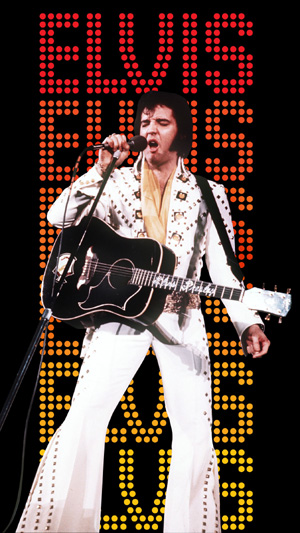
The Last Days of Elvis are the most inglorious one can imagine. Coming after a decline that has lasted for years, and that will help make a sort of icon Presley unpresentable Kitcher, good for families, for the nostalgic, and for the Burini U.S. province. Unlike all the pop stars who are daughters of him, Elvis gets to the end of his life that has long been legend, perhaps because they already died years before, still alive and still with the tuft on his head. The Elvis ranging from 60 to 16 August 1977 that is in fact a portrait of melancholy, conservation out of time, even the reaction. Elvis is dressed like an idiot in that era as well, modes of dress, not joking. It's Elvis who plays on the stages of Las Vegas in the middle of the casino, while outside the world explodes. It's Elvis who asks to enter the FBI and to denouncing Hoover the Beatles. It is the Elvis that, democratic convinced, is transformed into a friend and supporter of Nixon. It is, finally, filled with Elvis alcohol, drugs and amphetamines, lying to gain weight on bordopiscina of Graceland.
dead, the legacy presleyana appears to split in half: on one hand there are the adoring fans, who revere him as a saint. On the other critics that not only did not forgive the wandering and controversial moves, but even accuse him of every wickedness as possible, bringing back his great deeds in a kind of counterrevolutionary conspiracy. In his "History of Rock," says Piero Scaruffi: "Elvis Presley, 'the king', was the first great rock'n'roll swindle, and the model for all those that would follow. Mediocre singer, it was more like a brilliant marketing gimmick: a white man who not only sang the songs of the blacks, but he sang and moved like a black, oozing sensuality and animalistic thug posing as a rebel, when in fact it was only a telegenic face ". The accusation of having "stolen from the blacks" music - rock'n'roll - which according to some fundamentalist view more black you can not, of all that is most successful, is sometimes taken to extremes with results effect guaranteed, and so, in "Fight the Power", Public Enemy accused King of "racism" nonostante lo stesso Elvis abbia passato la giovinezza ad abbeverarsi alla fonte di Beale Street, la strada di Memphis simbolo della comunità afroamericana e una delle tante patrie del blues. Ma sono tante le tessere che non coincidono. Little Richard, uno che certo non è bianco, chiamò Elvis “una benedizione”, sottolineando come, senza il successo del Re, difficilmente il mercato si sarebbe aperto al rock’n’roll dei neri. John Lennon, il paladino dei pacifisti-bene, affermò che “prima di Elvis, c’era il nulla”. I Clash, il gruppo-militante per antonomasia, ripresero la copertina del primo album di Presley su RCA per la cover del loro London Calling , in un omaggio che più can not be explicit.
In fact, the appearance of Elvis at the halfway point of '50 remains one of the major fractures of the entire pop culture: his pelvic movements on television, were a scandal that he knew of rebellion. Its present incarnation as superhuman, alien, Christological, is the cornerstone that led to the entire mythography rock. His death, a hymn to the failure to replace the cross on the toilet.
Musically, the contribution of Presley remains crucial. Allegations of theft, and above all the Elvis Sun Records period (the one that goes from 1954 to 1956) to capture the birth of a kind that is just the latest heir to a long tradition bastard, contaminated to the bone, the daughter of so many and no race. A tradition that passes through the Mississippi Delta as the Appalachian Mountains, to the songs of the slaves as the yodel country, and that ultimately comes to crystallize in this thing called, of course, rock'n'roll. And one thing, the Elvis of "Blue Moon" as the Elvis of Graceland, Elvis's "Mystery Train" as the Elvis of the little film of series B, the Elvis of "I Do not Care If the Sun Do not Shine "like Elvis" '68 Comeback, "is one of the largest, and irremediable contradictions / events.


0 comments:
Post a Comment